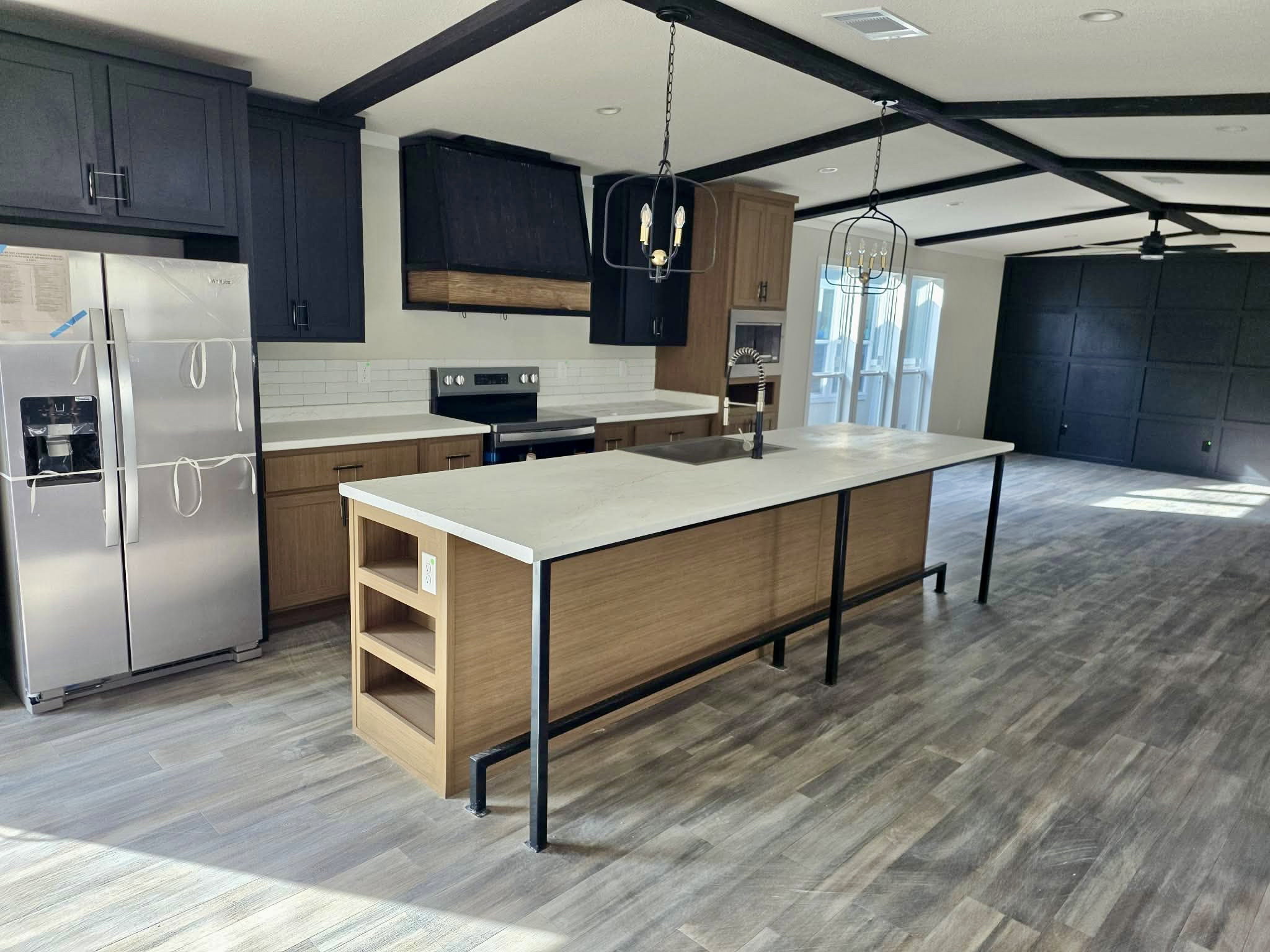
The A to Z of Modular Homes: Everything You Need to Know
Discover what is a modular home, how it's built, benefits, financing, and key differences from manufactured homes. Your guide to modular living.

11/26/2025
Understanding Modular Homes: A Modern Path to Affordable Homeownership
What is a modular home? A modular home is a prefabricated house built in sections (modules) in a factory, then transported to your property and assembled on a permanent foundation. Once completed, it is indistinguishable from a traditional site-built home.
Quick Answer:
- Built: In climate-controlled factories in sections
- Foundation: Permanent, like traditional homes
- Building Codes: Same local, state, and regional codes as site-built homes
- Property Type: Real property (not personal property)
- Timeline: Typically 3-5 months vs. 9-12 months for traditional builds
- Financing: Standard mortgages, same as site-built homes
- Value: Appreciates over time like traditional homes
Modular homes offer an affordable path to homeownership, though they are often confused with older mobile homes. These are permanent, high-quality residences that meet or exceed the same building standards as homes built entirely on-site. Constructed with the same materials—timber framing, drywall, and insulation—the factory process ensures superior quality control, less waste, and faster construction.
While your foundation is being poured, your home is built indoors, avoiding weather delays. Modules are assembled on-site in days, not months. This efficiency leads to significant savings, with homes typically costing $100 to $200 per square foot. As real property on a permanent foundation, modular homes qualify for standard mortgages and appreciate in value, building equity just like a site-built home.

So, What is a Modular Home and How is it Built?
Think of a modular home as the smart way to build—a process that eliminates the inefficiencies and weather delays of traditional construction by using precision-crafted sections to create a permanent home.
Defining a Modular Home
A modular home is built in sections—called modules—inside a factory, protected from weather. These complete sections include walls, floors, ceilings, plumbing, and electrical systems. Once built, they’re transported to your property and assembled on a permanent foundation, making them real property. Unlike manufactured homes, there’s no steel chassis, ensuring they qualify for traditional financing and appreciate in value like any other real estate. The Modular Building Systems: Overview and Benefits from the National Association of Home Builders offers more technical details.
The Modular Construction Process
The process is efficient because site work and home construction happen simultaneously, cutting the timeline to just 3 to 5 months.
Factory assembly involves skilled workers building each module in a climate-controlled facility with rigorous quality checks. Meanwhile, site preparation includes grading the land, connecting utilities, and pouring a permanent foundation. The reinforced modules are then transported to your site.

On-site assembly is quick, with a crane placing each module onto the foundation where crews bolt them together, often in just a few days. Finally, utility connections and finishing work are completed by local contractors, seamlessly joining the modules. This modular construction timeline shows each phase from factory to move-in.
Construction Details and Quality Standards
Modular homes often exceed the quality standards of site-built homes. They must meet the exact same local, state, and regional building codes as any traditionally constructed house.
They are often stronger because they must be engineered to withstand transportation, using extra reinforcement and stronger adhesives. A FEMA study after Hurricane Andrew found that modular homes performed exceptionally well against storm damage.
The quality materials are identical to those in traditional homes but are protected from weather during construction. The inspection process is more rigorous, involving multiple factory inspections, third-party certification, and final on-site inspections by local officials. In terms of quality, a modular home meets or exceeds the standards of traditional construction.
Modular vs. Manufactured Homes: Clearing the Confusion
People often use “modular home” and “manufactured home” interchangeably, but they are quite different. Understanding these differences is crucial for financing and long-term value.
The Key Differences Explained
Here’s a breakdown of what separates modular and manufactured homes.
Building codes are the primary distinction. Modular homes are built to the same local, state, and regional codes as site-built homes. Manufactured homes, however, are built to a national, federal HUD code.
A foundation for a modular home is always permanent (e.g., a concrete slab or basement). Manufactured homes are built on a steel chassis that remains part of the structure.
This leads to different property classifications. Modular homes are considered “real property” from day one. Manufactured homes are often classified as “personal property” unless they are permanently attached to land and the title is converted.
These differences impact financing and value appreciation. Modular homes qualify for standard mortgages and appreciate like site-built homes, while manufactured homes may require different loan types.
What is a modular home compared to a manufactured home?
The core difference is the building code. A modular home is constructed to meet specific local standards, accounting for regional climate and seismic needs. A manufactured home is built to the uniform national HUD code, established in 1976. The term “mobile home” refers to units built before this code.
The permanent foundation of a modular home, without a steel chassis, legally makes it real estate, inseparable from the land. While manufactured homes can be excellent permanent residences, their design retains an element of transportability, which can affect their legal classification and financing options. This deeper dive into the differences offers additional perspective.
Customization and Floor Plans
Modular homes offer extensive customization. Using computer-aided design (CAD) software, you can modify floor plans, move walls, and choose all your finishes to create a personalized home. The design possibilities are vast, allowing your home to blend in or stand out.
Manufactured homes have also come a long way, offering a wide variety of architectural styles and floor plans. While customization is typically more defined than with modular homes, there is still plenty of variety to find a home that fits your lifestyle.
We encourage you to explore both options. Check out our Guide on Modular Home Floor Plans and Compare Manufactured Homes Floor Plans to see the range of designs available.
The Pros and Cons of Choosing a Modular Home
Deciding on a new home is a big step. Let’s look at the advantages and practical challenges of choosing a modular home.
Advantages of Modular Homes
More families are choosing modular homes for several compelling reasons.

- Speed: Modular homes can be move-in ready in just 3 to 5 months—up to 50% faster than site-built homes—because construction occurs simultaneously with site prep.
- Cost: They typically cost 10% to 30% less than comparable site-built homes, running between $100 to $200 per square foot, due to bulk material purchasing and reduced waste.
- Quality: Factory construction in a controlled environment leads to tighter seals, better insulation, and superior craftsmanship, with multiple inspections throughout the process.
- Sustainability: The factory process produces significantly less waste and results in more energy-efficient homes, which lowers utility bills.
- Weather Protection: Materials are never exposed to rain, snow, or sun during construction, ensuring their integrity and preventing moisture-related issues.
Ready to see what’s possible? Explore our Affordable Modular Homes and our Affordable Eco Friendly Modular Homes options.
Disadvantages and Challenges
Modular homes are a fantastic option, but it’s important to be aware of the challenges.
- Land Acquisition: You must own or purchase land before construction. If undeveloped, you will face upfront costs for surveying, excavation, and utility hook-ups that can run from $4,000 to $11,000 or more.
- Zoning: You must verify local zoning laws and homeowners’ association (HOA) rules, as some areas have restrictions on placing modular homes.
- Financing: New builds typically require a construction-to-permanent loan, which can feel more complex than a standard mortgage. The good news is we offer flexible financing for all credit types and can walk you through the process.
- Customization Limits: While highly customizable, modular construction has practical limits compared to a fully custom (and much more expensive) site-built home.
- Site Access: The property must be accessible for large trucks and a crane. This may require clearing trees or improving road access, which should be factored into your budget.
The Financial Side: Investment, Financing, and Resale Value
Let’s talk money. Modular homes offer financial advantages that make them a smart choice for many homebuyers.
How are Modular Homes Financed?
Financing a modular home is straightforward because banks treat them exactly like site-built homes.
For new construction, buyers typically use a construction-to-permanent loan. This single loan covers the entire build and converts to a regular mortgage upon completion. For existing modular homes, all standard mortgage options are available: conventional, FHA, VA, and USDA loans.
At Mobile Homes Factory Direct, we offer flexible financing solutions for all credit types—even if you have bad credit or no credit history. We believe everyone deserves a path to homeownership. Explore your options on our Financing for Modular Homes page.
Refinancing is also a standard process, as appraisers use the same criteria they use for site-built homes.
Is a Modular Home a Good Investment?
Absolutely. A modular home is an excellent investment.
Modular homes appreciate in value over time, just like traditional houses, allowing you to build real equity. Their exceptional durability is a key asset; engineered to withstand transport, they are often stronger than site-built homes and come with long-term structural warranties.
Additionally, their superior factory-built seals and insulation lead to high energy efficiency, saving you money on utility bills. They are also a more sustainable option, as the factory process generates less waste. Check out our Affordable Eco Friendly Modular Homes to see what’s possible.
What is a modular home’s resale potential?
Modular homes have strong resale potential, appreciating at the same rate as site-built homes. Once assembled, a modular home is indistinguishable from a traditional home, and market perception has shifted to recognize their high quality.
When it’s time to sell, appraisers evaluate your modular home by comparing it to similar site-built homes in your neighborhood. They look at square footage, features, condition, and location—the same criteria used for any home appraisal. Your investment is secure and ready for growth.
Frequently Asked Questions about Modular Homes
Here are answers to some of the most common questions we get about modular homes.
How long do modular homes last?
Modular homes are built to last just as long as traditional site-built homes, with a lifespan of 50 years or more with proper maintenance. They are often built stronger to withstand the journey from the factory to your property, which contributes to their long-term durability. Many manufacturers offer impressive structural warranties, reflecting confidence in how well these homes are built.
Are modular homes subject to zoning restrictions?
Yes, and this is a good thing. Modular homes are governed by the same local, state, and regional zoning laws and building codes as traditional site-built homes. This ensures they are held to the same high standards as any other house in your neighborhood. It’s essential to check local ordinances and any homeowners’ association (HOA) rules before purchasing land. Our team has experience navigating these requirements in Texas and can help guide you.
Can you customize a modular home?
Yes, customization is a major benefit. Today’s modular home buyers work with designers to create homes that reflect their personal style. You can select and modify floor plans, choose everything from countertops to cabinet finishes, and incorporate special features. Using computer-aided design (CAD) tools, you can see your home in 3D before construction begins. The modular method makes many customizations easier and more affordable than you might think. Check out our New Mobile Home Models for inspiration to see the design flexibility available.
Your Next Steps to Modular Home Ownership
We hope this guide has answered your questions about what is a modular home and shown you why it’s a smart path to affordable homeownership. The journey blends modern efficiency with the enduring value of traditional real estate.

Here’s a simple walkthrough of the buying process:
- Decide on a Location: Find land for your home, considering your commute, schools, and amenities. Remember to check local zoning and ensure the site is accessible for delivery.
- Find a Reputable Builder: Partner with an expert who understands your needs. At Mobile Homes Factory Direct, we guide families throughout Texas to find the perfect home for their budget.
- Choose and Customize Your Home: Select a floor plan and personalize it to fit your lifestyle. From layout to finishes, this is your chance to create your dream home.
- Secure Financing: This step can be simple. We offer** flexible financing for all credit types, including bad or no credit**. We’ll help you find the right loan for your situation. Learn more about Financing for Modular Homes on our site.
- Site Prep and Construction: While your foundation is prepared on-site, your home is built in a climate-controlled factory, avoiding weather delays. 6.** Installation and Move-In**: The modules are transported to your site, assembled in days, and finished by local contractors. After a final inspection, you get the keys!
For a more detailed walkthrough, visit our Modular Home Buying Process guide.
At Mobile Homes Factory Direct, we’re proud to serve families across Texas, including Von Ormy, Somerset, Atascosa, Macdona, San Antonio, and JBSA Lackland. We offer the best homes at the best prices with a simple, straightforward process.
Ready to explore your options? Take a look at the different types of mobile homes we offer, which include both modular and manufactured homes. We’re here to make your homeownership dreams a reality.

Mobile Homes Factory Direct TX
Home should be within reach. Our mission is to make homeownership attainable with affordable manufactured and modular homes, no matter your credit history. We partner with a wide network of lenders and work case by case to find a payment and plan that fit your budget. We chase every viable option. If there's a path to approval, we'll work to find it.
License Number: MHDRET00036923
Get started with Mobile Homes Factory Direct TX
Find, design, and order your next home in a few clicks.